

Girl U Want (and the Art That Follows)
On music, art, and the quiet ways connection becomes creation

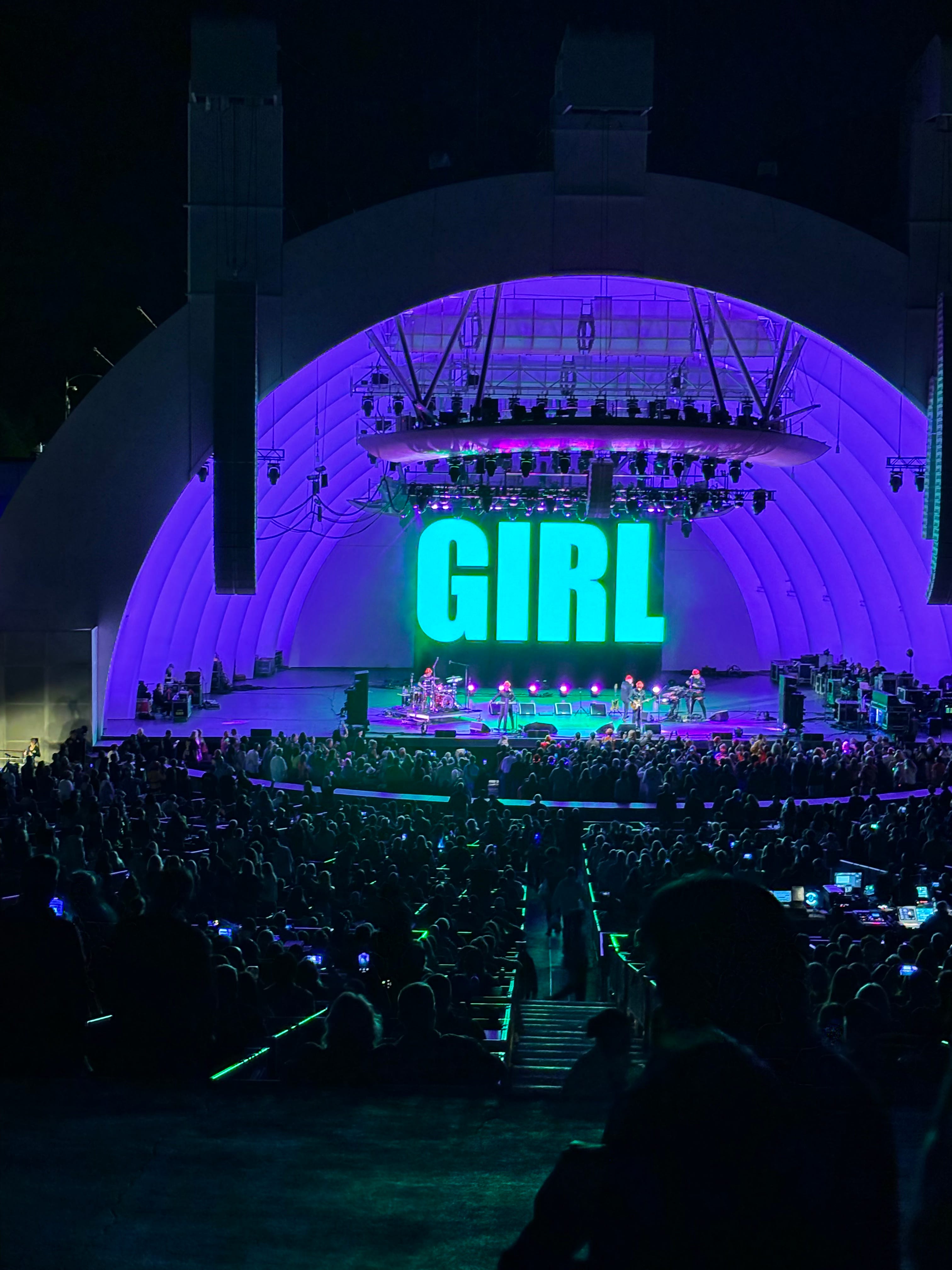
I’d been looking forward to this concert since July. What began as a long-awaited night of music turned into something larger — an unfolding reminder of how art threads through every part of my life, transforming experience into rhythm and rhythm into form.
The Night Itself
I’d been anticipating the Devo and B-52’s concert since the first of July, when I bought the tickets. That’s how much it meant to me — not just to hear the bands, but to experience something that felt like a return to the rhythms that shape both my life and my art. I’m writing about it now not only because of the music, or because I shared the night with someone new, but because of how naturally art wove itself through everything.
My journey as an artist isn’t about waiting for inspiration to strike; it’s about noticing connections — moments when life, sound, and image align in unexpected ways. This concert was one of those moments. The ideas didn’t arrive as abstractions; they arrived in color, pattern, and sound — vivid and immediate, intertwined with the start of a new connection that made them resonate even more deeply.
The night began long before the first note. My evening started in the mid-afternoon, facing familiar miles of congested freeway, with the usual construction delays. I was playing a Spotify mix of Devo and the B-52’s, though not for long; I’d been listening to them all week.
Once Leela (not her real name) joined me, I turned off the music so we could talk — the way people do when they’re comfortable in motion together.
We stopped at Trader Joe’s, stocking up for a simple picnic: pre-made wraps, salad, juices, water, fruit, chocolate-covered pistachios, and some spicy potato chips just for fun. Nothing fancy, but chosen together — small shared decisions that already felt like harmony.
We then headed toward the L.A. Zoo, where shuttle buses would take concertgoers up to the Hollywood Bowl. The weather was fabulous, as it often is in Los Angeles.
At the venue, we snagged the last table in one of the designated picnic areas and spread everything out. First, we added a critical element to the meal — a large, ice-cold beer from the concession stand. We didn’t even discuss whether to get our own; we just shared it naturally, passing it back and forth. That small gesture — easy, unplanned, unselfconscious — said everything about how comfortable we were together.
The beer itself turned out to be a surprise. It wasn’t an IPA, not something I’d normally reach for, but it was crisp, flavorful, and unexpectedly good. We both laughed at how impressed I was — good enough that when we went inside later, we bought more of the same beer.
Right behind the beer stand was the merchandise booth.
T-shirts were forty-five and fifty dollars.
We both looked at each other and laughed. She said, “Do you want one? I’ll get it for you.”
I shook my head and said, “No way — that’s outrageous.”
I couldn’t bring myself to let her pay fifty bucks for a shirt, and I didn’t want one badly enough to justify it.
We laughed again and walked away, beer in hand.
We arrived early enough to enjoy the atmosphere building around us: people finding their seats, comparing shirts, and greeting friends. The deejay came on first — a fast fifteen minutes of sound and video mashups, snippets of ’80s clips, and weirdly spliced humor. It loosened everyone up.
Leela and I started trading quick questions: Do you know this one? Where were you when that came out? Like it or hate it? We preferred to guess the years of the videos rather than, you know, ask our phones! Music turned into conversation, and conversation into connection.
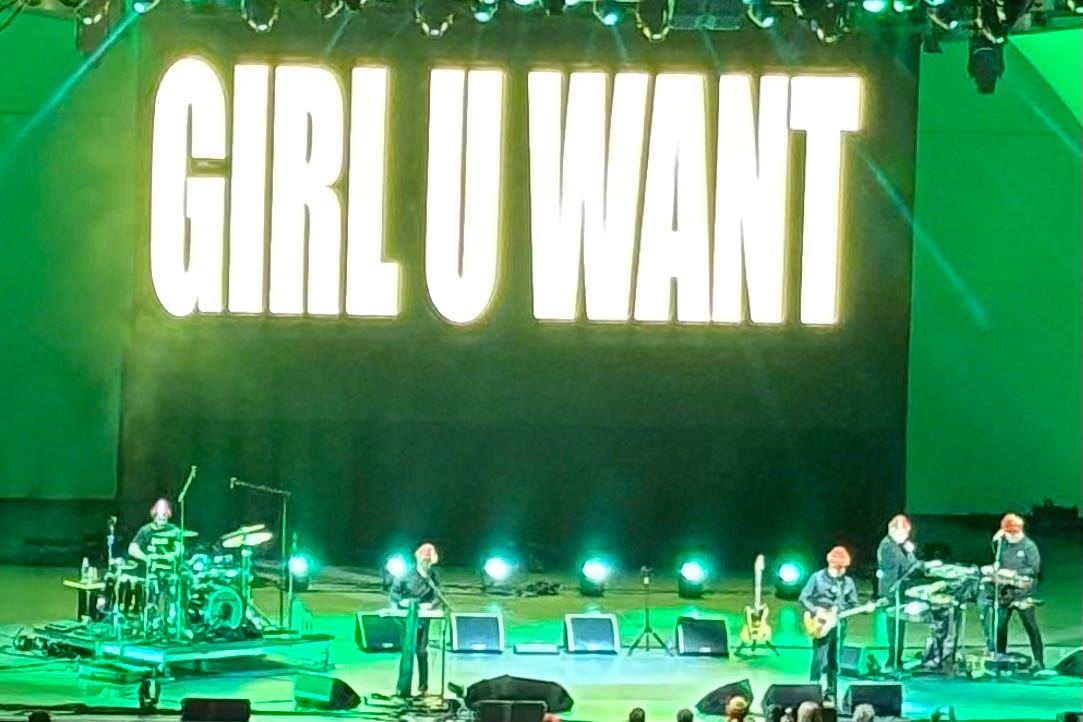
Then came Lene Lovich — fierce, theatrical, voice swooping across octaves — followed by Devo, who changed costumes a couple of times, as expected. Their red energy domes came later, as did the famous yellow suits. The sound was fantastic, sharp and strange as ever. The air was thick with rhythm and irony.
Behind them, the visuals began to shift — abstract diagrams, lines forming intricate shapes that built and rebuilt themselves in motion.
Leela leaned close to my ear, her voice almost lost in the sound: “That looks just like your art.”
She was right. The visuals looked like my morphogenetic line drawings — the kind where form emerges through rhythm and structure.
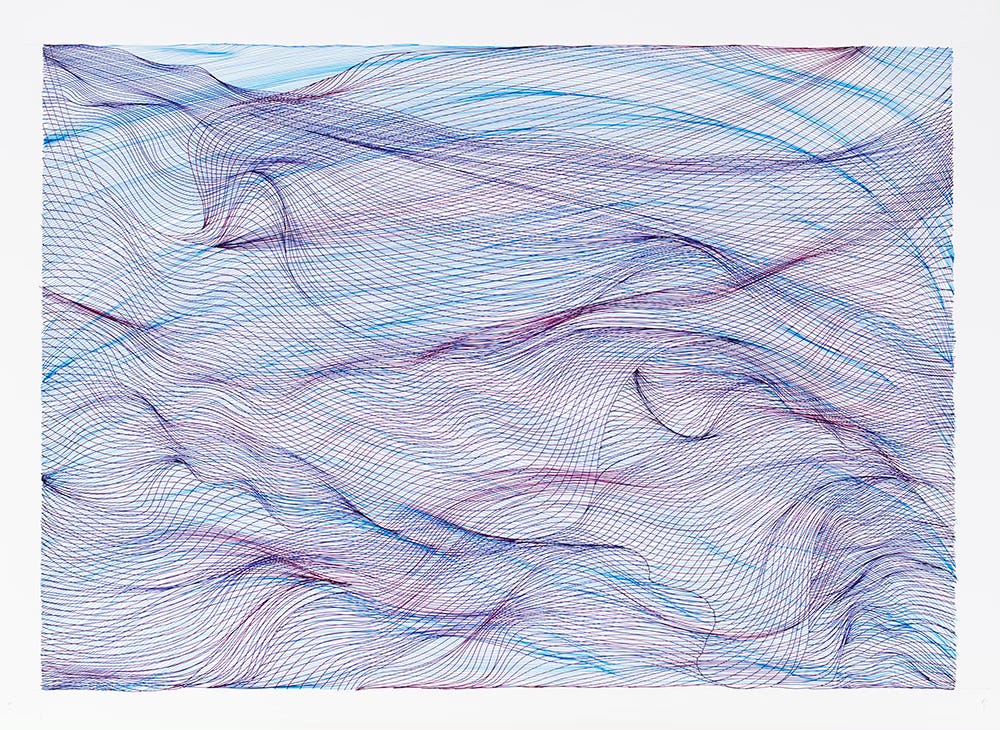
Later, during the B-52’s set, the stage filled with grids layered over old concert footage, then morphing into bold color fields that echoed Mondrian. Again, she leaned in, smiling: “That’s your line work,” and later, “Those look like your mandalas.”
She wasn’t just noticing the music; she was noticing me.
And that recognition — that sense of being seen through the shared lens of art — changed the whole night. I was already imagining new drawings that would capture some of those feelings.
I’ve been thinking for weeks about starting a new printmaking series inspired by Agnes Martin’s lines and Mondrian’s grids. So to see those same visual languages come alive onstage, while Leela pointed them out — it felt like my imagination had stepped into the world and waved back.
Somewhere between “Uncontrollable Urge” and “Love Shack,” the night stopped being about nostalgia and became about discovery — hers of me, mine of us, and both of us seeing art everywhere.
When the concert ended, the crowd poured toward the exits — a slow, packed current of bodies moving through the night. To stay together, one of us would place a hand on the other’s shoulder, guiding through the crush, a small gesture of care amid the noise.
Then, as the walkway opened up and the air returned, she reached for my hand. We walked the rest of the way like that — happily, hand in hand, replaying much of the concert — and it was such a simple thing, but it mattered; an organic rhythm continuing after the music stopped.
The Undercurrent
There’s a moment in any concert when you stop just listening and start feeling — when the music dissolves into the body and everything syncs.
In my twenties, thirties, forties, and even fifties, I went to concerts because I wanted to see my favorite bands live — to feel the rhythms in real time, to experience them more deeply than I ever could through a recording. Back then, nostalgia wasn’t part of it; those shows were first encounters, moments of discovery.
Now, when I see those same bands again, nostalgia enters the frame — a kind of echo between who I was and who I am.
Music runs in patterns: verse, chorus, bridge, return. It’s the same with art, and with life. You revisit the same motifs, but they sound different every time. Books and music replay differently each time — filtered through who we’ve become.
Yes, I’m stating the obvious. But I’m okay with that. I’ve been engaging in a lot of “meta reflections” lately on my life, particularly through music and my artwork.
As Devo’s tight, mechanical grooves gave way to the B-52’s exuberant chaos, I felt that same internal shift — the balance between precision and play.
Watching Leela respond, noticing, interpreting, whispering her observations into my ear — it wasn’t just affection. It was collaboration.
The Echo
The next morning, I walked under a wide blue sky, the songs still looping quietly inside me. The telephone wires overhead looked like musical staves; the clouds broke into grids. Every shape and sound seemed connected — rhythm turning into line, line turning into form.
That’s what concerts do now: they reset the creative circuitry. They remind me that art begins in the body — a pulse, a pattern, a shared vibration that becomes image.
Back home, I sketched what I remembered: the angular light, the looping diagrams, the Mondrian grids blending into color. The concert hadn’t ended; it had changed mediums.
I texted Leela in the afternoon, saying I was still thinking about how great the concert was. She replied that a friend was visiting but said she’d call later. She did — and we talked for ninety minutes that felt like five. The connection continues to deepen, naturally and easily.
We planned our next outing: a bike ride on the boardwalk, early enough to ride freely before the crowds arrive. When she said, “I don’t want to go too far — nothing too long, maybe an hour and a half?” I smiled. That’s how I knew she was a real cyclist.
So we’ll ride, talk, go to lunch, and see where that rhythm leads next.
I even have two decks of conversation cards — one for strangers and one for people who are dating — meant to spark honest questions that get past small talk. I’ve been saving them, unopened, to use with her. Another way to keep building something genuine: no games, no facades, just curiosity and truth from the start.
Her hand brushed mine as the final chord dissolved, the sound folding into the night. Neither of us could stop smiling — the music still playing somewhere between us.
---
Postscript
This reflection appears on both of my blogs — Aspie Art Journey, where I write about art, perception, and creative process; and Dating App Diaries, where I explore how connection and vulnerability reshape life after loss.
All of these posts — each reflection, observation, and story — will eventually find their place in my illustrated memoir, Lines on the Spectrum. Writing them is my way of verbally processing experiences that are also taking shape in visual form.
Some concerts don’t end when the lights go down; they just shift into a different medium.
Jeff Brackett
Artist • Writer • Educator
Exploring the intersections of art, autism, and human connection through the ongoing creative project Lines on the Spectrum — an illustrated memoir in progress.
📍 jeffreymbrackett.com
🖋 Aspie Art Journey — reflections on art, perception, and creative process
💬 Dating App Diaries — essays on vulnerability, connection, and rediscovery
📸 Instagram: @jeffbrackettart
“Art doesn’t just record a life — it reveals the rhythm underneath it.”