

Soundtracks on the Spectrum: Music, Regulation, and Identity
An Interlude in Lines on the Spectrum

More than Background Noise
I’m taking a brief pause from the Autism Series — not because I’m finished with it, but because there’s a thread running underneath everything I’ve been writing that deserves its own space: music.
While making final edits on this post, “Hit the Floor” by Linkin Park was pumping through my AirPods. The line “There are just too many times that people have tried to look inside of me” landed differently this time.
There have been many moments in my life where I’ve felt examined rather than understood, and music has often been the place where I don’t have to explain myself — where intensity, quiet, anger, or focus can exist without interpretation.
Listener, Not Musician
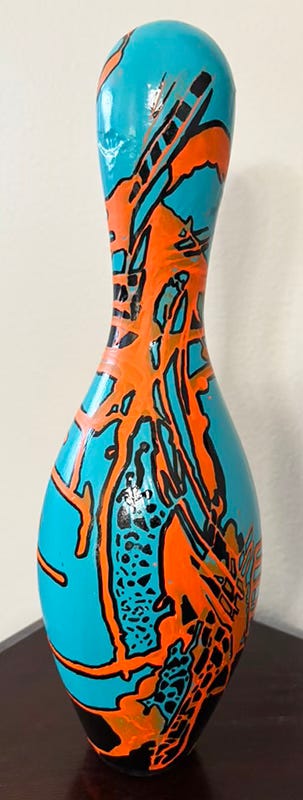
I’m not writing as a musician or critic. I don’t play an instrument, and I don’t read music — and as I’ve told more than one friend, karaoke is best left to braver souls than me.
I’m writing as a listener — someone for whom music is atmosphere, regulation, and memory more than theory or technique. It shapes how I move through the world more than how I analyze it.
Music has never been background noise for me. It’s closer to a tuning mechanism. Some days it sharpens focus; other days it softens anxiety or gives structure to scattered thoughts. When I look back, I can trace entire seasons of my life through songs and albums more clearly than through photographs.
Recently, someone asked me whether creating art feels the same way listening to music feels for them — whether I “lose myself” in it. The question stayed with me longer than expected.
It was one of those questions that reveals more about a person than they probably realize.
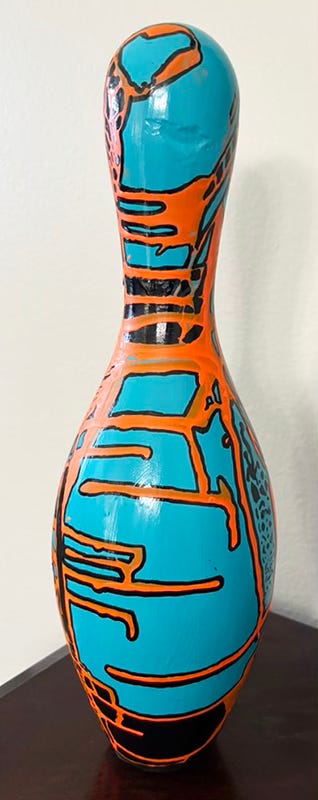
Music rarely dictates what I create, but it absolutely shapes how I inhabit the act of creating. It changes my internal temperature. It influences the tempo of my lines, the weight of my marks, and the emotional atmosphere I bring into the work.
If you see my drawings, you are also seeing the residue of whatever music moved through me while they were made.
This awareness isn’t new for me; it’s simply becoming more explicit. Music has always been present in what I now think of as the Aspie Art Journey — the ongoing attempt to understand who I am through what I make and how I move through the world.
I’ve also noticed that my relationship with music changes with the time of day.
Morning walks tend to be louder and more verbal; my mind is already sprinting, and music helps channel that energy instead of letting it scatter.
Late-afternoon walks are different. The same streets feel quieter, and the music becomes reflective rather than driving. I’m not looking for stimulation then — I’m processing the day.
The soundtrack shifts with the light, the temperature, and whatever emotional residue I’m carrying.
Some of the music that steadies me would sound intense or chaotic to other people. What feels calming to me might feel overwhelming to someone else.
Over time, I’ve come to understand that this isn’t a contradiction; it’s alignment.
Certain rhythms and textures organize my nervous system rather than disrupt it. What appears noisy from the outside can create order internally.
Environment plays a role as well.
Relocating to Los Angeles changed my sense of what music could mean in daily life. I’m no longer limited to rare stadium shows or occasional big tours.
There’s an entire ecosystem of local venues and intimate performances that invite exploration rather than spectacle. It’s less about chasing famous bands and more about engaging with live sound as a living, breathing part of the city.
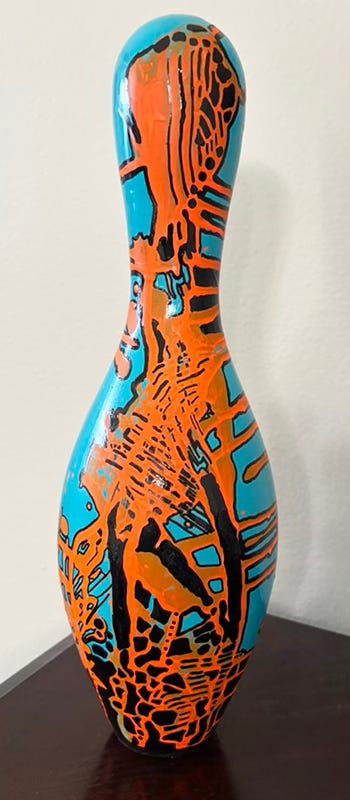
What follows isn’t a definitive list or a statement of taste. It’s simply a snapshot.
I chose a start time, hit shuffle, and let eleven songs play without skipping or curating. This is less a playlist and more a weather report — a small cross-section of how I regulate, reflect, and reset on an ordinary day.
11 More Songs
(See my “Shattered No Longer: 11 Songs That Woke Me Up in 2026” here.)
1. War? — System of a Down
A jolt of urgency that clears mental fog. It sounds chaotic on the surface, but internally it sharpens focus rather than scattering it.
2. Mr. Moustache — Nirvana
Raw edge and sarcasm wrapped in distortion. It’s less about anger and more about shaking loose whatever feels socially performative or false.
3. Vicarious — Tool
A slow-building intensity that feels architectural. It organizes my thoughts the way complex patterns organize visual space in a drawing.
4. Girlfriend Is Better (Live) — Talking Heads
Playful and kinetic, almost mischievous. It reminds me that rhythm and humor can coexist with introspection rather than cancel it out.
5. Mudshovel — Staind
Heavy but grounding. A reminder that emotional weight can be acknowledged without letting it dominate the entire mood.
6. Travelling Riverside Blues — Led Zeppelin
Looser, more fluid energy — a musical exhale. It creates movement without pressure, like sketching without a finished image in mind.
7. Eyes Wide Open — The B-52’s
Bright and slightly surreal, a tonal reset. It keeps the day from collapsing into monotony and reintroduces curiosity.
8. Little Things — Bush
Driving and repetitive in a productive way. It’s the kind of track that helps sustain momentum when attention starts to drift.
9. Seasons — Chris Cornell
Reflective and spacious. This is the emotional checkpoint — the place where the day slows enough to notice what actually happened.
10. S.I.B. (Swelling Itching Brain) — DEVO
Controlled absurdity. It turns nervous energy into something almost humorous, reminding me that intensity doesn’t always need solemnity.
11. Alone + Easy Target — Foo Fighters
A closing surge of kinetic clarity. It feels less like isolation and more like reclaiming forward motion after reflection.
Music Phases
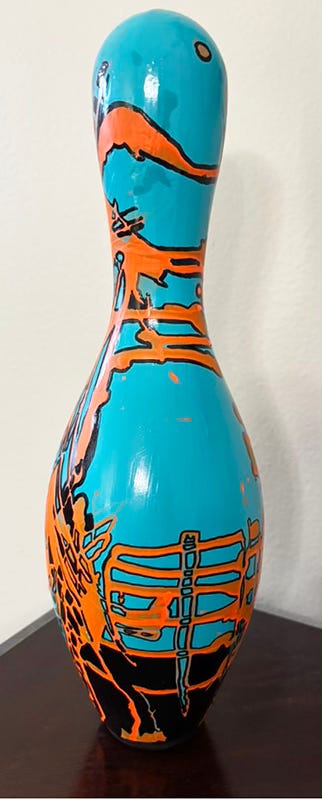
Much like other areas of my life, I’ve gone through periods where I’ve “gotten really into” particular bands. I’m not attempting to recount every group I’ve ever lived inside for a while. Rather, here is a brief list of artists and genres that have played important roles in my musical journey:
U2 — emotional expansion and searching — late 1980s into the early 1990s
Pearl Jam — introspection and authenticity — 1990s through roughly 2010
Talking Heads — intellectual and artistic patterning — 1979 onward; it faded at times, but never fully left
Nu Metal — catharsis, regulation, and intensity — around 2020 to the present, my primary genre today (alongside selective grunge and New Wave, especially DEVO and The B-52’s)
These weren’t just listening habits; they were seasons of immersion.
There will be a longer exploration of music later under the broader umbrella of Lines on the Spectrum. This post is more of an opening gesture — an acknowledgment that music is not an accessory to my life or my art, but one of the ways I navigate both.
Jeff Brackett
Artist | Writer | Educator
Exploring the intersections of art, autism, and human connection through the ongoing creative project Lines on the Spectrum — an illustrated memoir in progress.
https://www.jeffreymbrackett.com/
Aspie Art Journey — reflections on art, perception, and creative process.
Dating App Diaries — essays on vulnerability, connection, and rediscovery.
Thanks for reading Aspie Art Journey! Subscribe for free to receive new posts and support my work.